

West Virginia
Traumatic Brain Injury Services
We are proud to serve as West Virginia’s designated lead agency for coordination of services for West Virginians with traumatic brain injuries. A variety of services and resources are offered through the program for individuals who have experienced a TBI and their caregivers.
Make a Referral to TBI Services ProgramWhat is a Traumatic Brain Injury?
The Centers for Disease Control and Prevention defines Traumatic Brain Injury (TBI) as a disruption in the normal function of the brain that can be caused by a bump, blow, or jolt to the head, or penetrating head injury (near-drowning in WV).
- A TBI affects how the brain works.
- TBI is a major cause of death and disability.
- TBIs can often go undiagnosed.
- A TBI may lead to short- or long-term health problems.
- A TBI during childhood may affect brain development.
Statistics
- At least 64 million adults report having experienced one or more TBIs in their lifetime (almost 25% of U.S. adults).
- Five years after surviving a moderate to severe TBI, more than half of adults who were employed at the time of their injury no longer have a job.
- Each year, 1 in 10 children experience a TBI.
Symptoms of TBI
Physical
- Headache
- Poor balance
- Light sensitivity
- Noise sensitivity
- Dizziness
Emotional
- Irritability
- Anxious
- Sadness
- Lack of motivation
- Personality change
Cognitive
- Feel in a “fog”
- Feel “slowed down”
- Difficulty remembering
- Easily confused
- Difficulty concentrating
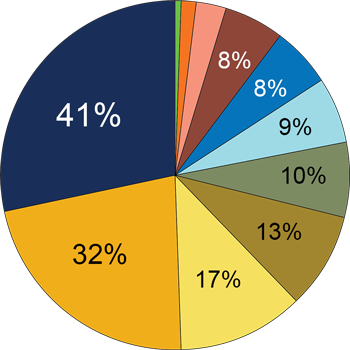
Causes of TBI in West Virginia (24–25)
- Car/truck accident – 41%
- Fall – 32%
- Struck by or against something – 17%
- Other – 13%
- ATV/off-road vehicle accident – 10%
- Sports/recreation – 9%
- Motorcycle accident – 8%
- Assault/abuse – 8%
- Military/combat-related incident – 4%
- Gunshot/firearm – 2%
- Near-drowning – 1%
-
Neuropsychological Evaluations
TBI Services helps coordinate and pay for neuropsychological evaluations. These tests show what a person’s strengths are and what challenges they might have after their brain injury. The results also help create a plan with helpful strategies to improve the person’s quality of life.

-
Traumatic Brain Injury Screening
TBI Screening is a quick and simple check to see if someone might have had a brain injury. The goal is to find possible brain injuries early and help the person get the right diagnosis and treatment.
-
Financial Assistance
TBI Services offers help through a program called “Funds for You”. This program provides financial support when no other help is available. It is funded by the WV Department of Human Services and can help pay for items or services that improve independence and quality of life.
-
Training/Technical Assistance
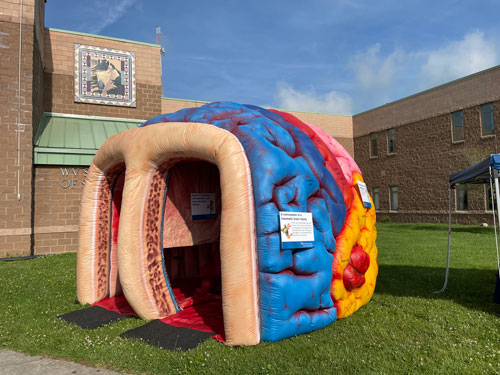
TBI Services can give technical assistance to agencies that have questions about brain injuries. We also offer the fun and educational Big Brain display for events.
-
-
Support Groups
We offer two support groups each month: a monthly Virtual TBI Support Group and Hybrid Caregiver Support Group. These groups are a safe place to share experiences and support each other.
Return To Learn/REAP
We provide access to the Get Schooled on Concussions Program. This program teaches families, schools and communities about how to support students returning to school after a concussion. It also gives teachers tools to help students with academic adjustments. This program is free to all schools in West Virginia.
Brain Injury Resource Coordination
Social workers with TBI Services will work with the person to make a plan that helps them become more independent, meet any immediate needs and improve their quality of life through person-centered planning and resource coordination.
Eligibility for Services
All services are free for people who:
- Live in West Virginia
- Provide medical documentation of a traumatic brain injury (TBI)
The Traumatic Brain Injury Services are supported in part by the West Virginia Department of Health and Human Resources, Bureau for Behavioral Health and Health Facilities and the U.S. Department of Health and Human Services, Administration For Community Living Grant Number 90TBSG0038-01-00. Grantees undertaking projects with government spon- sorship are encouraged to express freely their findings and conclusions. Points of view or opinions do not, therefore, necessarily represent official ACL policy. All printed materials are available in alternate formats upon request. 8/25
Traumatic Brain Injury Program
959 Hartman Run Road
Morgantown, WV 26505
E-mail: TBI@hsc.wvu.edu
For Program Information, please call: 877-724-8244
Follow WV TBI on:

Please note this number is not staffed 24 hours a day and is a resource referral number only. If you are in crisis or need emergency assistance, please call 911 or The Lifeline hotline at 988. The Lifeline provides 24/7, free and confidential support for people in distress, prevention and crisis resources for you or your loved ones, and best practices for professionals.